
Cart
0
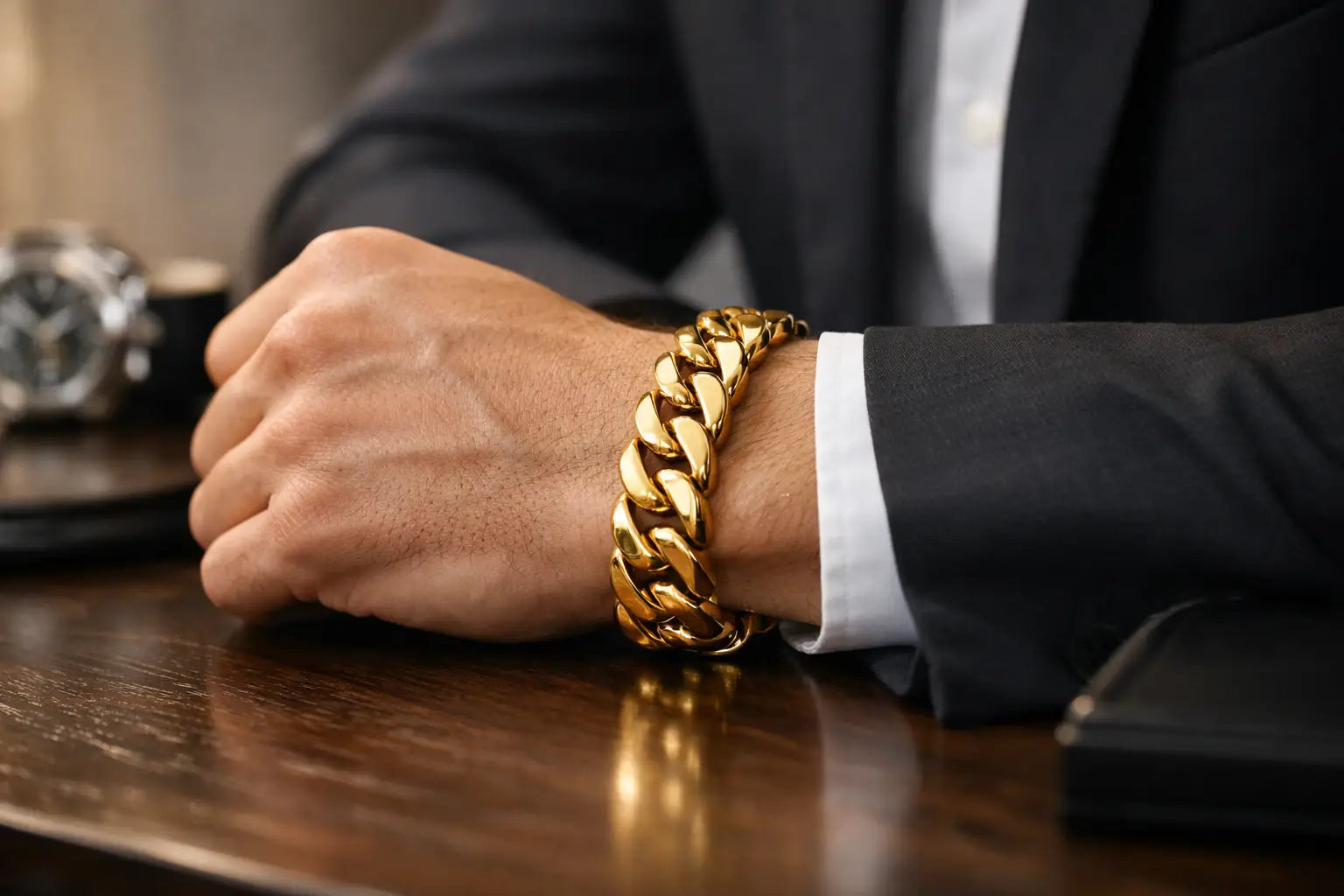
A heavy weight gold bracelet for men should feel substantial the moment it reaches your wrist. It is not a small accessory chosen only for color or trend. High-karat gold, visible gram weight, and a confident profile give the piece its presence - and give you clear details to compare before you buy.
For men who prefer gold with real material value, the decision comes down to more than choosing a chain pattern. Purity, weight, construction, fit, and price all shape how the bracelet wears today and what it may mean to you over time. Shop the details, not just the photo.
What Makes a Gold Bracelet Heavy Weight?
There is no single gram number that defines a heavy bracelet. A bracelet that feels heavy on one wrist may look understated on another, especially when width and link style change. Still, a heavy-weight piece is generally designed with enough gold mass to create a visible, solid presence rather than a light, delicate look.
Gram weight is the most direct starting point. A wider curb bracelet, a dense Byzantine-style link, or a solid bangle will usually weigh more than a slim open-link design of the same length. Do not compare weight alone without looking at dimensions. A compact, closely built link can carry impressive grams while sitting neatly on the wrist, while a broad bracelet may distribute its weight across a larger surface.
Construction matters just as much. Solid gold links typically offer a firmer feel and more substantial value in gold content than hollow designs. Hollow jewelry can achieve a bold look at a lower total weight and price, but it may be more vulnerable to dents if it receives hard impact. For a bracelet intended for frequent wear, substantial construction is worth asking about.
Choose Between 21K and 22K Gold
At Al Wahdah Jewellers, high-karat gold is part of the value. Both 21K and 22K offer the rich yellow tone many buyers expect from traditional gold jewelry, but they are not identical.
22K gold contains a higher proportion of pure gold, giving it a deep, warm color and strong precious-metal appeal. It is an excellent choice for statement pieces, celebration gifts, and buyers who want maximum high-karat character. Because high-purity gold is softer than lower-karat alloys, the design and thickness of the bracelet become especially relevant. A well-made, heavier bracelet can handle regular wear well, but it still deserves thoughtful treatment.
21K gold contains slightly more alloy metal, which can give it a little more everyday resilience while retaining a rich gold appearance. For someone who plans to wear a bracelet often, especially alongside a watch or other jewelry, 21K can be a practical balance of beauty, durability, and value.
The right choice depends on your priority. If your focus is the highest gold content and classic yellow-gold richness, start with 22K. If you want a high-karat bracelet for more active, regular use, compare 21K options closely. Always check the stated karat and gram weight together.
Find the Right Weight for Your Wrist
A heavy bracelet should look intentional, not oversized by accident. The ideal gram weight depends on wrist size, the thickness of the design, and whether you want the bracelet to be your main jewelry piece or one part of a larger look.
Men with slimmer wrists often get a better result from dense, medium-width links than from an extremely wide, flat design. The bracelet still has satisfying weight, but the proportion stays clean. Larger wrists can carry broader Cuban links, layered link patterns, or heavier bangles with greater ease.
Length is equally important. Measure your wrist with a flexible tape, then allow enough room for movement. A close fit can look sharp with a structured bangle or compact link bracelet. A link bracelet usually needs a little extra space so it can move naturally without pinching. It should not slide so far down the hand that it turns constantly or catches on a watch.
If you are purchasing a gift, avoid guessing based only on height or build. An existing bracelet measurement is the most useful reference. When that is not possible, a classic adjustable link style is often safer than a rigid bangle.
The Watch Test
If the bracelet will be worn with a watch, put the two together before making your final choice. A wide, heavy bracelet beside a large watch can look powerful, but the combination needs separation. Wearing the bracelet on the opposite wrist is the simplest approach. If both are worn on one wrist, choose a design that will not scrape the watch case or compete with its shape.
Gold Bracelet Designs That Carry Weight Well
The best design is the one that matches how you dress and how often you plan to wear it. A classic curb or Cuban-style link remains a strong choice because it is recognizable, masculine, and easy to pair with traditional or modern clothing. Its flat, interlocking links reflect light well and make weight visible.
Rounder rope and wheat-style patterns offer more texture. They can look refined from a distance and detailed up close, making them a smart option for buyers who want weight without an overly wide silhouette. Byzantine and intricate woven designs create a more formal finish, often suited to occasions where the bracelet is meant to stand out.
A solid gold bangle offers a different kind of presence. It is clean, direct, and strong on the wrist, particularly when finished with subtle engraved detail or a polished surface. Bangles can be less flexible on sizing, so measure carefully and make sure the opening or clasp is comfortable to use.
For a first heavy bracelet, classic links are often the most versatile. They work with a crisp shirt, traditional attire, and everyday neutral colors. More intricate styles make sense when you already know you prefer visible texture and a dressier finish.
Look Beyond the AED Price
A bracelet price should be read as a complete picture: gold purity, gram weight, craftsmanship, and current gold market conditions all matter. Two pieces with similar prices may offer very different value if one is significantly heavier, higher in karat, or more complex to produce.
Start by checking the exact weight in grams. Then compare the karat. From there, look at the finish, clasp, link density, and design work. A handmade-looking patterned bracelet may carry higher workmanship charges than a simple chain style, even at a similar weight. That does not make it a poor choice - it simply means you are paying for both gold and artistry.
Gold jewelry can hold lasting material appeal, but it should not be treated as identical to buying raw bullion. Retail jewelry pricing includes workmanship and design, while resale terms can vary. Buy a piece you will be proud to wear, and let clear purity and weight details support a well-informed purchase.
Check These Details Before You Buy
Before choosing your bracelet, confirm that the karat, gram weight, length, and AED price are clearly stated. Look closely at the clasp in product images and ask whether the bracelet has a safety feature if the design is particularly heavy. A secure box clasp, lobster clasp, or well-fitted locking mechanism can make a real difference for a valuable piece.
Also consider the surface finish. High-polish gold has strong shine but may show fine marks more readily with daily wear. Textured, patterned, or brushed finishes can be more forgiving while still looking luxurious. Neither is automatically better - it depends on whether you want mirror-like brilliance or a more understated finish.
For an in-person purchase, try the bracelet on and move your wrist naturally. Close the clasp yourself. Check for sharp edges, awkward twists, or links that sit unevenly. For online shopping, use the listed gram weight and length as your key comparison points rather than relying on image scale alone.
Keep Heavy Gold Looking Its Best
High-karat gold deserves simple care. Take off your bracelet for gym sessions, heavy lifting, swimming, or work that involves repeated contact with hard surfaces. Store it separately in a soft pouch or lined box so it does not rub against other jewelry.
Clean it gently with warm water, mild soap, and a soft cloth, then dry it completely. Avoid harsh chemicals and abrasive cleaners. If a clasp loosens or a link looks worn, have it checked promptly rather than waiting for a small issue to become a lost bracelet.
Choose a bracelet that feels right the first time you fasten it. The best heavy gold piece is one you will reach for often - substantial in grams, confident in style, and made to become part of your signature look.

