
Cart
0
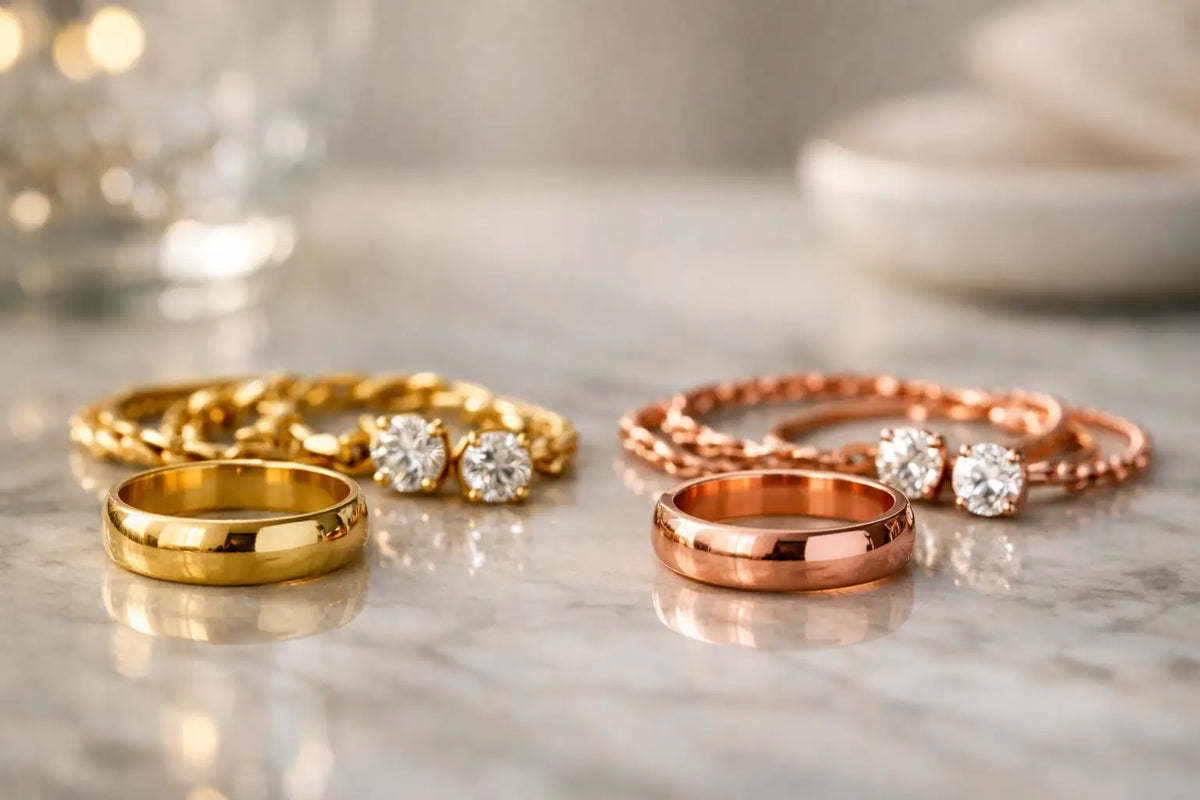
A gold purchase should look right on the wearer and make sense on the scale. When comparing yellow gold versus rose gold, color is the first difference you notice, but karat, gram weight, design, and long-term value deserve equal attention. For substantial jewelry such as bangles, chains, wedding sets, and statement rings, the metal itself is part of the decision.
Yellow gold carries the classic warm glow associated with traditional gold jewelry. Rose gold has a softer pink tone created by adding more copper to the alloy. Both can be beautiful, wearable choices. The better option depends on the look you want, the purity you prefer, and whether you are buying a light fashion piece or meaningful high-karat gold jewelry.
Yellow Gold Versus Rose Gold at a Glance
Pure gold is naturally rich yellow. Because pure 24K gold is soft for most jewelry designs, it is mixed with other metals to create 22K, 21K, 18K, and lower-karat alloys. The amount and type of added metal influence the final color and feel.
Yellow gold is alloyed to preserve gold's natural sunshine color. In 22K and 21K pieces, the high gold content remains very visible, creating the deep, warm finish many buyers expect from fine jewelry. It suits traditional patterns, textured bangles, bold earrings, layered chains, and coordinated occasion sets especially well.
Rose gold gets its blush from copper, often with a small amount of silver or zinc depending on the formula. More copper generally creates a stronger pink or reddish tone. The most noticeable rose shades are often found in 18K and 14K jewelry, where there is more room in the alloy for copper. At 21K or 22K, a rose-tinted finish may appear softer and more subtle because the gold content is much higher.
That distinction matters for shoppers who want both visible rose color and high purity. Ask to see the item in person or request clear images in natural light. A high-karat rose gold piece will not always look like the deep pink rose jewelry seen in lower-karat collections.
Color: Traditional Glow or Soft Pink Warmth?
Yellow gold makes a confident statement. Its color is unmistakable and remains closely connected to wedding jewelry, family gifting, cultural celebrations, and gold bought for its material value. Detailed workmanship also reads beautifully in yellow gold because the metal's warm surface brings out carved, braided, floral, and geometric designs.
Rose gold feels gentler and more contemporary. It can bring warmth to clean, minimal silhouettes and works well for buyers who want a gold tone that stands apart from the classic yellow finish. A rose gold ring or bracelet can look especially refined when worn alone, while yellow gold often has the presence to anchor a fuller stack or complete set.
Neither color is automatically more flattering. Yellow gold commonly enhances warm, olive, deep, and neutral undertones, while rose gold can complement fair, neutral, olive, and cool-leaning complexions with its pink warmth. Personal style matters more than a skin-tone rule. Try each color against your hand, wrist, and neckline rather than judging it only in a display case.
Karat and Gold Content Come First
For buyers focused on precious-metal value, purity should lead the conversation. A 22K yellow gold bangle contains a very high percentage of gold. Its gram weight, current gold rate, workmanship, and design all contribute to its AED price. The yellow color is a natural fit for this level of purity.
A 21K gold piece also offers high gold content while allowing added strength for intricate construction and regular wear. This makes 21K a practical choice for rings, chains, pendants, bracelets, and designs with finer links or moving parts.
Rose gold can be made in high karats, but its character changes with purity. The higher the karat, the more dominant the natural yellow of gold becomes. If your priority is an unmistakably rosy tone, you may find more choices at 18K or below. If your priority is high gold content and substantial gram weight, yellow gold will usually offer the broadest selection of traditional 21K and 22K designs.
Do not assume a rose-colored piece is less valuable simply because it is pink. Value comes from the stated karat, verified weight, craftsmanship, and market conditions, not from color alone. Compare like for like: 21K to 21K or 22K to 22K, then look at the exact grams and total price.
Durability and Everyday Wear
Copper gives rose gold alloys added hardness, which is why lower-karat rose gold is often described as durable. Still, durability is not a single-color promise. A 22K piece in either color remains softer than an 18K piece because it contains more gold. A wide 22K bangle can be excellent for regular wear, but it should be treated differently from a low-karat, diamond-set fashion ring.
Design is just as important as karat. A solid, heavier bangle is naturally more resilient than a delicate hollow piece. A thick chain can handle more daily movement than an ultra-fine link. Rings receive the most contact with hard surfaces, so buyers who work with their hands may prefer a stronger construction, a lower-profile setting, or a 21K design over a very soft high-karat ring.
Both yellow and rose gold can show fine scratches over time. This is normal wear, not a sign that the gold is poor quality. High-polish surfaces show marks more easily than textured or patterned finishes. Remove fine jewelry before heavy exercise, household cleaning, swimming, or tasks involving impact.
Consider Sensitivity and Maintenance
Yellow gold alloys may contain silver, copper, zinc, or other metals, while rose gold typically relies more heavily on copper. Most people wear both comfortably, but anyone with a known metal sensitivity should ask about the alloy before purchasing. This is particularly relevant for earrings, rings worn every day, and jewelry that sits closely against the skin.
Rose gold can develop a slightly deeper, richer patina over the years because of its copper content. Some wearers love this lived-in warmth. Others prefer the consistently bright, classic appearance of yellow gold. Professional cleaning can refresh either finish, but avoid harsh chemicals and abrasive home treatments.
Choosing Gold for Weddings, Gifting, and Celebrations
For weddings and major family occasions, yellow gold is often the natural choice. It photographs with richness, pairs beautifully with traditional attire, and offers the unmistakable appearance of fine gold. Matching sets in 21K or 22K create a complete look with a necklace, earrings, ring, and bangles designed to belong together.
Rose gold is a thoughtful alternative for an engagement ring, anniversary gift, or a personal piece with a softer modern feel. It pairs easily with white metal watches and can look striking beside yellow gold when the styling is intentional. A two-tone look lets you enjoy both shades without committing fully to one.
For gifting, consider the recipient's existing jewelry. Someone who wears mostly yellow gold will usually get more use from a yellow gold pendant, chain, or bangle. Someone drawn to blush tones, minimalist fashion, or mixed-metal styling may appreciate rose gold more. When in doubt, choose the karat and weight first, then select the color that fits their wardrobe.
Buy by Weight, Wear by Style
A beautiful gold piece should never be reduced to color alone. Before you choose, check the karat stamp, confirm the weight in grams, assess whether the construction suits the intended wear, and compare the final price clearly. For a serious purchase, these details tell you far more than a display-light shine.
At Al Wahdah Jewellers, high-karat 21K and 22K jewelry is presented with the purity, gram weight, and AED price buyers need to compare confidently. Explore a heavier bangle, a statement chain, or a complete set with the same attention you would give any meaningful gold purchase.
Choose yellow gold when you want the fullest expression of classic fine gold. Choose rose gold when its warm blush feels personal and distinctive. Then let the piece earn its place in your collection through the quality of its gold, the strength of its design, and how often you reach for it.

